Feeling lost is quite normal. We just don’t like admitting it.
Growing up, I was taught to make the right decisions — choose the right course, take the right job, date the right person, don’t waste time, don’t make mistakes.
The problem is that some things cannot be figured out in advance.
Sometimes the only way to find what fits is through trial, error and elimination.
Try something. Learn from it. Keep what works. Eliminate what doesn’t.
Step 1: Accept that you may not know yet
There is pressure to have life figured out, but I don’t think most people do.
We make decisions using the information, priorities and version of ourselves we have at the time.
Then life changes.
We change.
What made sense five years ago may stop making sense today. That does not necessarily mean the old decision was wrong.
It may simply mean it has run its course.
If you feel lost, stop demanding an immediate answer.
Step 2: Explore and eliminate
If you don’t know what fits, test things.
Spend some money.
Try the class.
Take the job.
Build the side project.
You are looking for one of two answers:
Yes, more of this.
Or:
Nope. Definitely not this.
Both move you forward.
Step 3: Don’t wander forever
Trial and error only works if you learn from each trial.
If you keep changing direction without eliminating anything or committing to anything, exploration becomes aimlessness.
So you need an anchor.
Step 4: Write your own tombstone
Imagine your life is over and you get only three lines on your tombstone.
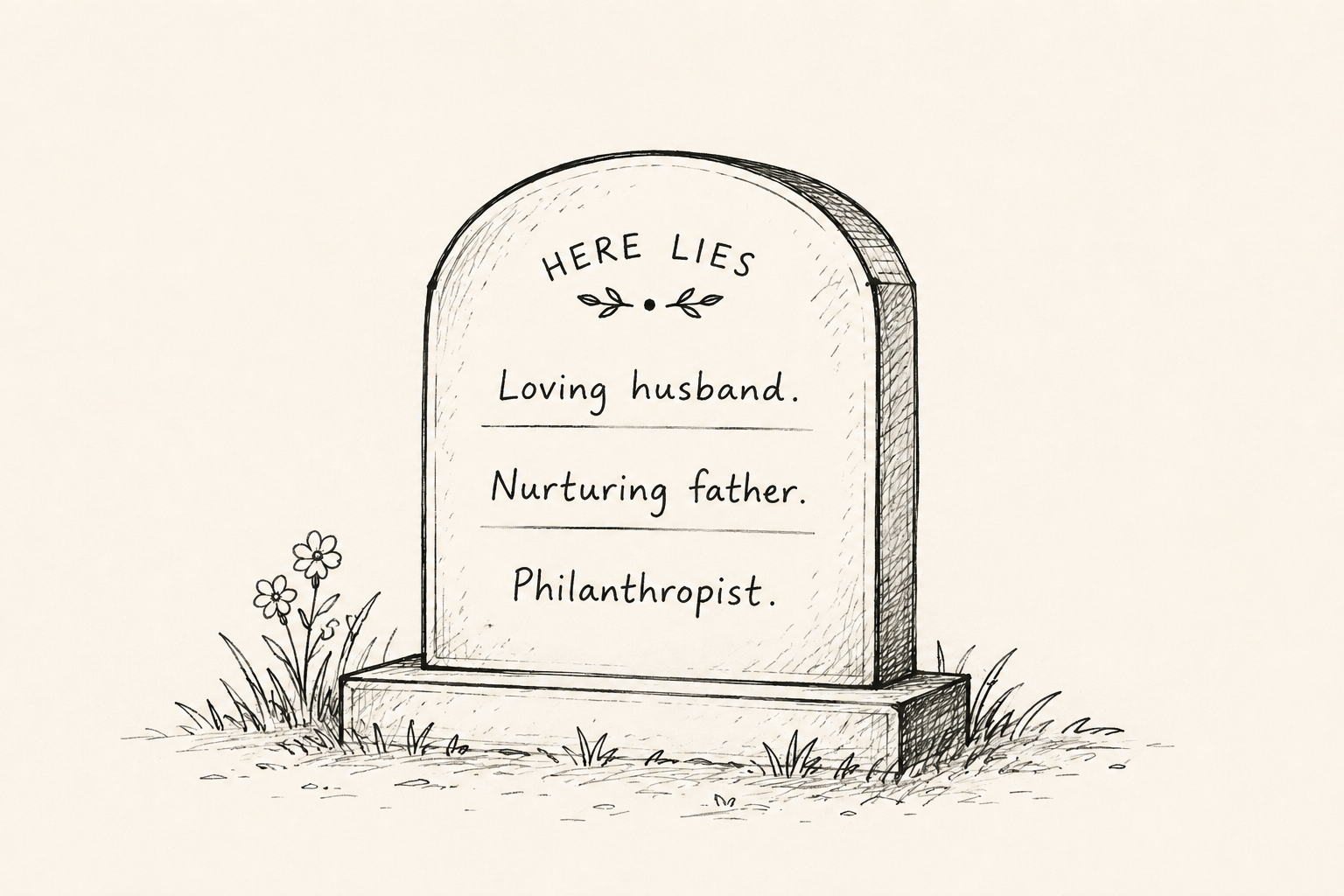
What three things do you want people who actually knew you to remember?
Mine, when I first did this exercise, were:
Loving husband.
Nurturing father.
Philanthropist.
There is no correct answer.
That is the point.
Step 5: Work backwards
Now ask:
Am I living in a way that makes those three things more likely to become true?
If I want to be remembered as a nurturing father but I am never around, something does not match.
The tombstone will not tell me exactly what to do next.
But it tells me whether I am heading in roughly the right direction.
You are allowed to rewrite it
Your three lines may change as you change.
What mattered to you at 25 may not be what matters at 45.
That is fine.
Revisit them occasionally — not every other week.
If they change, ask yourself why.
What I learned
When I feel lost, I don’t need to magically discover the perfect path.
I can explore, eliminate and adjust.
But exploration without direction eventually becomes wandering.
That is why I start at the end.
If you don’t know which road to take, first decide where you want the road to eventually lead.
Sources and notes
- The original InLeo guide, “Find Thyself”, preserved as source material. The rebuilt guide retains its core ideas around feeling lost, trial and error, purposeful exploration and using an end-state as an anchor.